
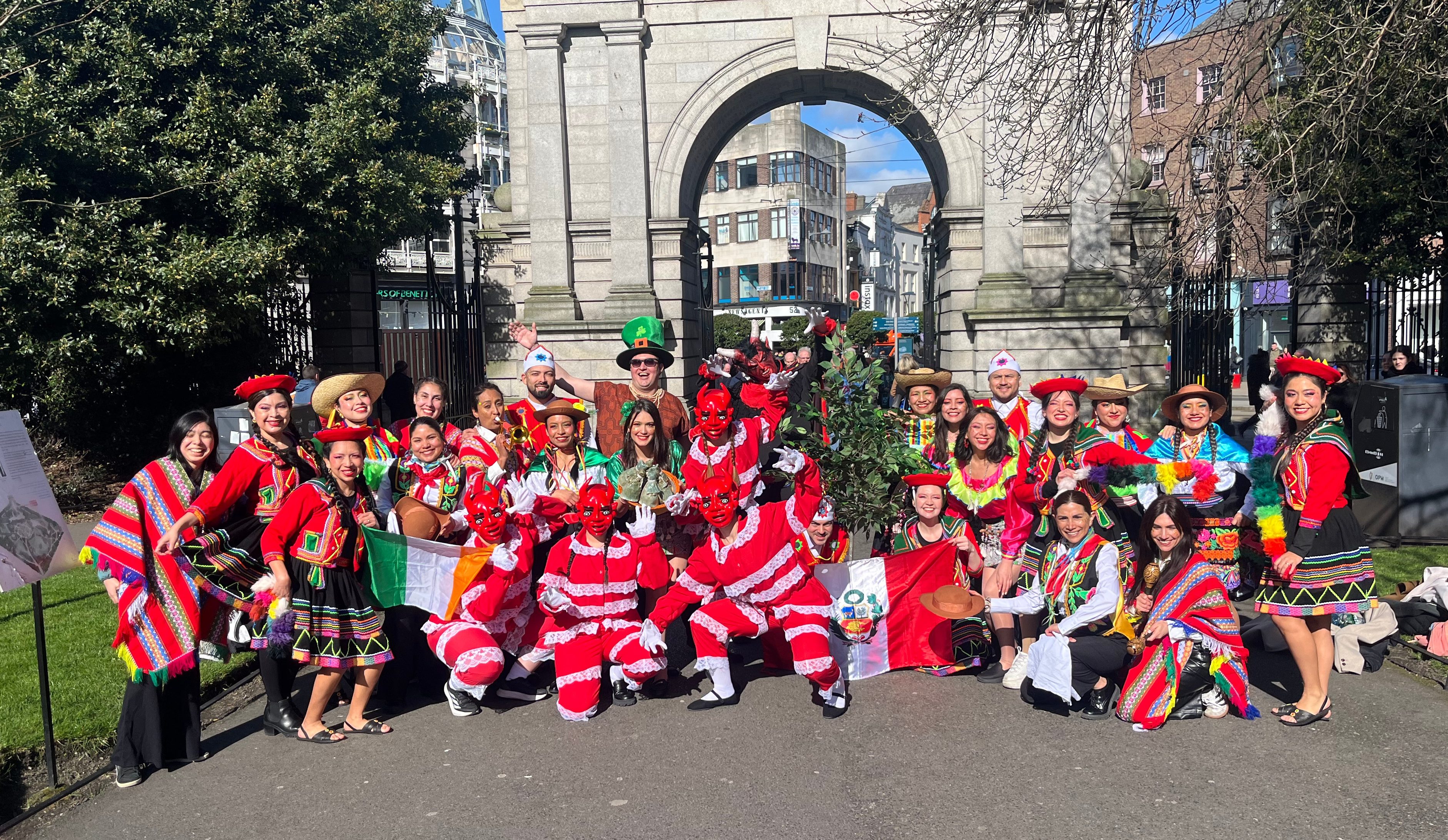
At this year’s St Patrick’s Festival 2026, our group brought a vibrant burst of Peruvian culture to the heart of Dublin, transforming the stage into a celebration of joy, tradition and community. Our performance was inspired entirely by the Carnival season in Peru, a time of colour, music and deep cultural roots that connect generations through dance and ritual.
We opened the presentation with the lively Carnaval de Cajamarca, setting the tone with its unmistakable festive energy, playful spirit and colourful expressions that define one of Peru’s most iconic Carnival celebrations. From the very first moments, the audience was immersed in the joy and mischief that make Carnival such a special time of year.
At the heart of our performance was the yunza, one of the most beloved traditions of Peruvian Carnival, and for the first time ever, a yunza was brought to Ireland. Traditionally, a yunza involves a decorated tree filled with gifts, around which people dance in celebration. One by one, participants take turns cutting the tree until it finally falls, and everyone rushes to collect the presents, symbolising abundance, community and shared joy.
Recreating this tradition on stage came with its challenges. As it was not possible to cut down the tree while performing, we adapted the tradition in a way that kept its spirit alive: instead of felling the tree, we threw gifts directly to the audience. This created a lively and interactive moment, inviting the crowd to become part of the celebration and experience the excitement and spontaneity that define a true yunza.

Our Dances: A Journey Through Peruvian Carnival

Pandilla Moyobambina
Originating from the Amazon region, this dance is known for its elegance and strong sense of community. Dancers move in coordinated lines and circles, reflecting unity and celebration. The flowing movements, combined with vibrant costumes, brought warmth and joy to the stage and drew the audience into the rhythm of the jungle.
A special detail in our performance was the inclusion of “la señora de los juanes”. One of the dancers carried juanes as props and danced with them throughout the piece. This was a tribute to the tradition in Moyobamba, where, during pandilla performances, someone offers juanes to the audience and judges. As pandilla is often part of a friendly competition, where groups are compared on their presentation and execution, this gesture represents hospitality, pride and cultural identity. Bringing this element to the stage allowed us to share not only the dance, but also the living traditions that surround it.

Carnaval de Wara Wara Quispicanchi
This Andean Carnival dance is rich in symbolism and playful interaction. Representing agricultural traditions and seasonal renewal, it combines energetic footwork with expressive gestures. The dancers captured the festive spirit of the Andes, where music, dance and community come together to celebrate life and nature.

Son de los Diablos
One of the most enjoyed performances of the day, this Afro-Peruvian dance immediately captured the audience’s attention. The dancers made a dramatic entrance, playfully “scaring” others off the stage and taking over the space. A commanding main devil led the group, while the diablitos brought humour and personality, teasing, mocking and interacting with both the leader and the audience. This blend of character, rhythm and storytelling made it a truly memorable highlight.

Pacasito
A deeply traditional and representative dance, Pacasito offered a meaningful glimpse into Peru’s cultural roots. Rather than focusing on theatrical elements, this piece remained faithful to its origins, highlighting authenticity, rhythm and heritage. Its simplicity allowed the tradition itself to take centre stage, creating a grounded and genuine moment within the performance.

Huaylas Moderno
Full of energy and excitement, this dance showcased the evolution of Andean traditions into a vibrant, modern expression. Fast footwork, joyful jumps and dynamic choreography filled the stage with life, reflecting the resilience and celebratory spirit of the Andean people.

A Memorable Closing
To close the performance, all dancers came together for the Carnaval de Arequipa, creating a powerful and uplifting finale. This final moment united all styles, regions and performers on stage, reflecting the true essence of Carnival: community, joy and togetherness.
This performance was not only a display of dance, but a celebration of identity and cultural exchange. Bringing a yunza to Ireland for the first time made this moment even more meaningful, allowing us to share a living tradition in an authentic and inclusive way.
We are incredibly proud to have represented Peru in such an iconic celebration and grateful for the warm welcome from the Dublin community. This performance was more than a show, it was a piece of home, shared with the world.
Also Part of the St Patrick’s Parade

In addition to our stage performance, we were also proud to take part in the St Patrick’s Day Parade. On this occasion, we stepped into a different role — not representing Peru, but celebrating an important Irish tradition: the making and sharing of tea. It was a unique and meaningful experience to honour Irish culture from within, highlighting the spirit of hospitality and everyday rituals that bring people together.
Being part of both the festival stage and the parade allowed us to celebrate cultural exchange in a truly special way, sharing a piece of Peru while also embracing and paying tribute to Ireland.
Watch the full video of our presentation to relive the energy, colour and joy of this unforgettable celebration, and explore each dance through the images that capture these special moments.

Leave a Reply