
If I say the 31st of October, what’s the first thing that comes to your mind? As a Peruvian living in Ireland, I will have two different answers for you, depending on where I am at the moment.
I have been living in Ireland for the past 4 years, so I will probably say Halloween, but if I were in Peru, my answer would be different. I will say it’s Día de la Canción Criolla (Creole Music Day) without even blinking! And as October has started the time to decide which one you want to celebrate has come!
But what’s Creole Music Day? Well, let me tell you all about it! In 1944, the Peruvian President Manuel Prado Ugarteche established the festivity with a Supreme Resolution. It’s from that moment on that in Peru, every 31st of October, people will celebrate this day. But you must be asking yourself what are we celebrating exactly, well we celebrate music! As simple as that!
A little bit of history to give you context on the celebration. At the beginning of the 20th century, Peru was strongly influenced by pre-Hispanic melodies, Spanish vals and African music. The mix of all this is what created what we now call Creole Music.
There are different types of Creole Music, but the most popular are:
Festejo
Which in english means “Celebration” is a festive form of Afro-Peruvian music. The dance is a staple in the Black coastal populations, and it celebrates the emancipation of slaves. Festejo is recognised for its high energy and the improvisation carried out by the dancers. Among the most famous songs you can find “Ingá”, “El alcatráz”, “Jipy Jay” and more!

Marinera
It’s a partner dance that originated along the coastal regions of Peru, using handkerchiefs as props. The dance is a mix of Spanish contradanza and Andean zamacueca, and is a stylised reenactment of a courtship. Among the most famous songs you can find “La Concheperla”, “Asi baila mi Trujillana”, and more!

Tondero
This dance is well-known in the north of Peru, and it’s quite similar to the Marinera. It’s accompanied by a guitar and cajon (box-shaped percussion instrument), and also tells the story of a couple’s romance and falling in love.
Vals
The Creole Waltz, or Peruvian waltz, is an adaptation of the European waltz brought to the Americas during colonial times by Spain. In the Viceroyalty of Peru, the waltz was gradually adapted to the likings of the Creole people. In the 20th century, the genre became symbolic of the nation’s culture as it gained widespread popularity in the country. Among the most famous songs you can find “Nada Soy”, “Y se llama Perú”, “Regresa” and more!
It’s been 79 years since we first started to celebrate it! Now every 31st of October, if you are in Lima, yes! Even at a Halloween Party, the DJ will play at least one of those songs, and you know that you have to leave your heart on the dance floor.
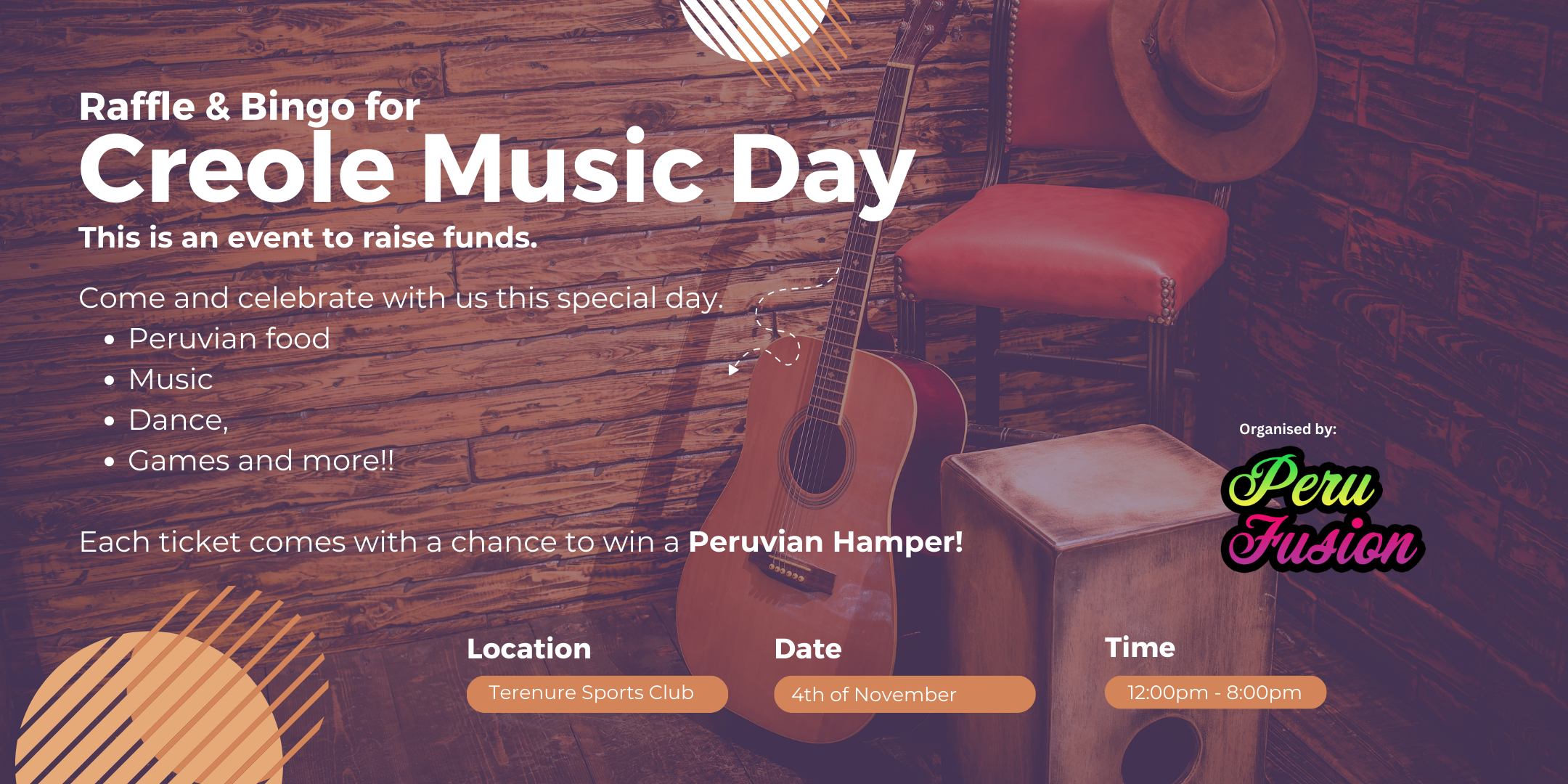
But as we are in Ireland, and as Halloween originated in Ireland over 2000 years ago, we have chosen to celebrate both on different days! If you want to know more about Creole Music Day, come to our event on the 4th of November. We will be having Peruvian food available for purchase, special performances, games and more! The event will be taking place at Terenure Sport Club and will run from 12pm to 8pm.
Get your tickets! (Sold Out)


Leave a Reply